Yellowstone, Yosemite, Grand Canyon, Zion, and Glacier make a strong starting shortlist, while the right choice depends on the scenery and pace we want. Yellowstone covers 2.2 million acres across three states, so even one park can call for a long trip. A recreation visit means one person’s entry into a park for recreation, not necessarily a unique person.
These picks balance iconic scenery, different outdoor experiences, and practical trip value, rather than claiming one objective winner. The best fit depends on the landscape, access, season, and time we have. We can use this list to narrow our choices before setting dates or planning a route.
Key Takeaways
- Choose a park by scenery, activities, access, and available time.
- Yellowstone offers geothermal features, wildlife, lakes, and mountain scenery.
- Yosemite, the Grand Canyon, and Zion each reward a different pace.
- Olympic and Redwood add coast and forest options.
- Check current access, road, trail, and reservation details before travel.
Some trips call for famous viewpoints and easy walks; others need longer hikes, remote settings, or several days on the road. Matching the park to our time and travel style matters more than chasing a single ranking. We can start with one kind of scenery, then see which parks make it possible.
Choose the landscape we most want to experience before narrowing the list by season and travel time.
National Parks to Explore for a First U.S. Trip
For a first U.S. national-park trip, Yellowstone is the best all-around starting point for varied scenery, while Yosemite suits granite-and-waterfall views and Zion suits canyon hikes. The United States has 63 designated national parks, so a short list can help us choose a first stop. Best depends on whether we value easy viewpoints, long hikes, wildlife, or remote scenery.
These U.S. parks are useful first-trip choices, not a ranking of parks worldwide. The best national parks to explore in the world depend on what a traveler wants from a trip. No single list can make beauty mean the same thing to everyone.
Iconic first stops
Yellowstone, Yosemite, Grand Canyon, Zion, and Glacier offer a broad first visit, from geysers to alpine scenery. Each has a clear signature, but each also allows us to shape the day around viewpoints, trails, or time outdoors.
| Park | State | Signature landscape | Best fit |
|---|---|---|---|
| Yellowstone | Wyoming, Montana, Idaho | Geysers and wildlife | First-time variety |
| Yosemite | California | Granite and waterfalls | Hiking and viewpoints |
| Grand Canyon | Arizona | Immense canyon scenery | Rim views and river options |
| Zion | Utah | Sandstone canyon and river | Active hikes |
| Glacier | Montana | Alpine lakes and peaks | Mountain scenery |
Choose the park that fits the scenery and pace we want, not the one with the highest place on a list.
Quieter alternatives
Olympic brings together coast, forest, and mountains, while Redwood pairs old-growth forest with Pacific shoreline. Those parks suit travelers who want a less familiar mix than the best-known western stops.
We can also compare how much time we have for driving, walking, and reaching trailheads. A park’s name may sound familiar, but the right trip depends on where we enter and what we hope to do. Match the shortlist to the landscape we most want, not just to a ranking position.
What Makes Yellowstone a Standout?
Yellowstone pairs geothermal features such as Old Faithful with wildlife-rich valleys across a 2.2-million-acre landscape. It became the first U.S. national park in 1872 and stretches across Wyoming, Montana, and Idaho. Its scale is part of the appeal, but it also makes driving distances matter.
A recreation visit counts an entry, not necessarily one unique visitor. Yellowstone recorded 570,272 recreation visits in May 2026, up 1% from May 2025. It logged 773,653 visits through May 2026, also up 1% year over year.
Geysers, hot springs, and wildlife
Three features give us a useful starting point for a visit:
- Geysers and hot springs, including Old Faithful and Grand Prismatic Spring.
- Bison-filled valleys and other wildlife.
- Lakes and mountain scenery across a large park.
These sights do not sit in one compact area. A stop at a geyser basin, a wildlife-viewing drive, and a lake overlook can take us across long stretches of road.
A huge park with changing visitation
May 2026 was the park’s busiest May on record. The month’s count measures recreation visits, which may include repeat entries by the same person. Yellowstone’s May 2026 visits also show why monthly totals can change from year to year.
We can enjoy the park through short walks and pullouts, or use longer trails to spend more time away from roads. That choice affects how much ground we can cover in a day. A guide to outdoor travel styles can help us think through the pace and type of trip that suits us.
Allow for substantial travel time inside the park rather than treating its map as a short day-trip loop.
Where Yosemite’s Granite and Waterfalls Meet
Yosemite is the clearest pick for towering granite scenery, with Half Dome, El Capitan, and Yosemite Falls among its defining sights. The park offers celebrated views in Yosemite Valley and a quieter high-country feel at Tuolumne Meadows. Those areas show different sides of the same national park.
Tunnel View gives us a broad panorama without a hike. We can see a sweep of valley scenery from this well-known viewpoint. Half Dome is a more demanding destination, and specific hikes call for careful planning.
Yosemite Valley makes it easy to pair waterfalls and granite walls with short walks and major viewpoints. Yosemite Falls is a defining sight, while El Capitan draws attention to the sheer scale of the cliffs. A trail day can take more effort than a stop at a roadside overlook.
Tuolumne Meadows offers a high-country option beyond the valley. Its open setting gives us a different view of the park, especially if we want to spend time away from the busiest valley stops. We should leave room for travel between areas rather than treating them as adjacent walks.
Yosemite’s hiking options range from brief paths to strenuous routes. Before choosing a specific hike, check current access and permit rules. Conditions and access can affect whether a planned trail works on the dates we visit.
We can shape a trip around waterfalls, valley viewpoints, or a longer day on the trail. The right plan depends on our energy and how much time we can give each area. Build in time beyond the main valley if we want a fuller picture of Yosemite.
How to Experience the Grand Canyon
The Grand Canyon is the strongest choice for a landscape whose scale is best understood from several viewpoints rather than one photograph. The Colorado River carved a canyon about 18 miles wide and 278 miles long. Its size makes a rim visit very different from a trip down into the canyon.
The North Rim and South Rim are distinct entry areas, not quick stops on one day trip. Each offers its own approach to canyon views. The Grand Canyon is also a UNESCO World Heritage Site.
Rim viewpoints let us take in the layered cliffs without committing to a long descent. We can pause at overlooks, watch the light shift, and choose a short walk that fits the day. For many visitors, the scale becomes clearer after seeing the canyon from more than one point.
Hiking below the rim takes more effort and planning than walking between overlooks. A descent changes the trip from a sequence of views into a demanding outing with more distance and elevation to manage. We should choose that kind of day only if it fits our fitness, time, and plans.
River-based options offer another way to experience the canyon. They shift our view from the rim to the river corridor, but require a trip built around that activity rather than a quick stop at an overlook. The North and South rims also sit far enough apart that we should not plan both as casual stops.
Sunset can bring out changes in color and shadow across the canyon walls. We can choose a viewpoint based on how much walking we want, then allow time to enjoy the view rather than rushing between stops. Decide whether the trip is about rim scenery or hiking into the canyon before setting the daily itinerary.
What Are Utah’s Mighty Five National Parks?
Utah’s Mighty Five are Zion, Bryce Canyon, Arches, Canyonlands, and Capitol Reef, and each rewards a different pace of exploration. The name refers to these five Utah national parks, not the five highest-ranked parks nationally. Their red-rock features suit different hikes, drives, and lengths of stay.
Each park has its own terrain and planning needs. We should not assume a single route gives us a full visit to all five. The table helps us see the differences at a glance.
Zion and Bryce Canyon
Zion centers on a sandstone canyon and the Virgin River, with hikes that can make for an active day. Bryce Canyon is known for hoodoos, the tall rock forms clustered around its amphitheater. Its viewpoints and trails suit short walks as well as longer loops.
We can choose Zion for canyon hikes or Bryce Canyon for a closer look at its distinctive formations. Either park can hold our attention for a full day, depending on how far we walk and how many stops we make.
Arches, Canyonlands, and Capitol Reef
Arches holds more than 2,000 natural arches. Canyonlands contains canyons carved by the Green and Colorado rivers, with large districts to plan separately. Capitol Reef brings cliffs and desert scenery to a Utah route.
| Park | Defining landscape | Sample experience | Trip-fit note |
|---|---|---|---|
| Zion | Sandstone canyon and Virgin River | Canyon hikes | Active day hikes |
| Bryce Canyon | Hoodoos | Amphitheater viewpoints and trails | Short walks and longer loops |
| Arches | More than 2,000 natural arches | Arch-viewing hikes | Concentrated formations |
| Canyonlands | River-cut canyons and mesas | Overlooks and hikes | Plan large districts separately |
| Capitol Reef | Cliffs and desert scenery | Scenic drives and hikes | Varied Utah route stop |
Some travelers will prefer a few stops at overlooks, while others want longer hikes and time on the road. We can set the route by choosing which park matters most, then deciding how much time to give the others. Treat each park as its own destination rather than assuming one itinerary covers all five.
Glacier or Grand Teton for Alpine Scenery?
Glacier is the stronger pick for alpine lakes and a scenic mountain drive, while Grand Teton is ideal for trails beneath a dramatic peak range. Glacier National Park has more than 700 lakes and the seasonal Going-to-the-Sun Road. Grand Teton has more than 250 miles of trails, including access to Cascade Canyon.
Seasonal road access and mountain weather can shape what we can do. We should build a route around the stops that will be open, not just the ones that look close on a map. Conditions at high elevations can also change the feel of a trail day.
Glacier suits travelers who want lakes, rugged peaks, and a drive through mountain scenery. Going-to-the-Sun Road is seasonal, so access to its high-country stops depends on the time of year. We can pair scenic pullouts with hikes, but the road itself is a major part of the experience.
Grand Teton offers a jagged mountain range and a wide trail network. Hikes lead toward views of the peaks, while Cascade Canyon gives us an option for a longer outing. The park can suit a range of abilities, though we should choose a trail that fits our time and comfort.
A shared trip with Yellowstone can work, but the parks are not next-door stops. We should allow realistic driving time between them and avoid cramming the route with too many daily goals. That matters even more when seasonal roads shape where we can go.
We can choose Glacier for the mix of alpine lakes and a scenic drive, or Grand Teton for trail access below dramatic mountains. Both offer strong scenery, but they deliver it in different ways. Check seasonal road access before building a route around a particular high-country stop.
Which Coastal and Forest Parks Should We Explore?
Olympic is the best single choice for combining mountains, rainforest, and Pacific beaches in one national-park trip. More than 70 miles of coast add to its wide range of settings. That variety comes with separate areas to plan, while Acadia and Redwood pair coast and forest in different ways.
Olympic’s highlights are spread across distinct parts of the park. A base that cuts down on backtracking can save time for walks and views. Acadia has nearly 160 miles of hiking trails and 45 miles of carriage roads.
Olympic’s many ecosystems
Three experiences show how varied Olympic can feel:
- Hoh Rain Forest, with a lush forest setting.
- Beaches along the Pacific coast.
- Lake Crescent, where water and mountain scenery meet.
The Hoh Rain Forest, beaches, and Lake Crescent are not one compact cluster. We should group stops by area and allow for driving between them. That makes a short visit easier to shape around one part of the park.
Acadia and Redwood by land and coast
Acadia offers coastal drives, trails, and carriage roads. The carriage roads give us another way to explore without using a hiking trail for every outing. Its coast and forest make a good fit for travelers who want walks and scenic stops.
Redwood National and State Parks include nearly 40 miles of Pacific coastline. The experience can combine old-growth groves, prairies, and shoreline. These settings differ from Acadia’s coastal routes and Olympic’s mix of rainforest, mountains, and beaches.
We can choose Olympic for a wide mix of ecosystems, Acadia for coastal routes and trails, or Redwood for groves and shoreline. Each trip works best when we account for the distance between the places we want to see. Pick a base that minimizes backtracking when a park’s highlights are spread across separate areas.
Rocky Mountain or Mount Rainier for a Mountain Trip?
Rocky Mountain suits travelers after a broad trail-and-lake menu, while Mount Rainier is the pick for a dramatic volcano and expansive mountain views. Rocky Mountain National Park has more than 350 miles of scenic trails. Mount Rainier rises 14,410 feet above the surrounding area.
Rocky Mountain requires timed-entry reservations during peak season. The reservation rule can affect when we enter and how we plan the day. Current conditions matter in either park, especially for hikes at high elevation.
Rocky Mountain gives us a broad choice of trails, lakes, and high peaks. We can plan a visit around a lake walk, a longer hike, or scenic stops, depending on how much time we have. The range of options makes it a flexible mountain trip.
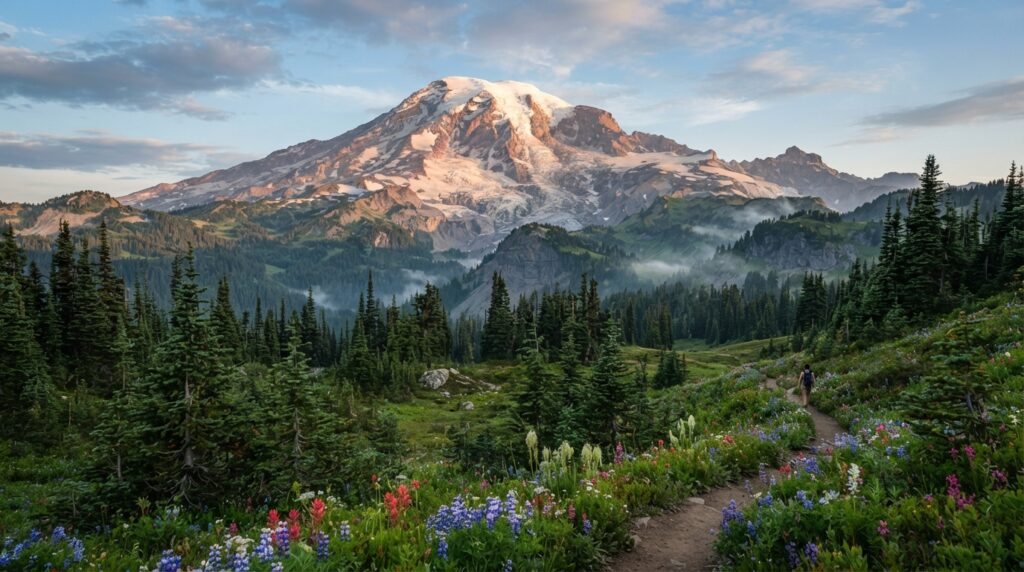
Mount Rainier centers on its namesake volcano and the views around it. Its dramatic shape can define the trip, even when we spend the day on shorter walks or scenic stops. The park suits travelers who want a clear mountain focus.
Summer can help with access to higher trails, but it does not remove the need to check trail conditions. We should confirm current access for either park before setting a strenuous day. Weather and snow can change what is practical at elevation.
Our choice can come down to trail variety or the sight of a towering volcano. Both parks offer mountain scenery, but the days can feel quite different. Check altitude and current access conditions before committing to a strenuous high-elevation hike.
Are Alaska’s National Parks Worth the Extra Planning?
Alaska is worth the extra planning for travelers who want vast wilderness, wildlife, and scenery that feels far removed from a quick roadside stop. Denali National Park and Preserve covers 6 million acres and has few marked trails. Its size suits visitors comfortable with guided trips or self-directed wilderness plans.
Only about 30% of Denali visitors see the mountain. A visit can still offer a rewarding wilderness experience, but seeing the peak is not guaranteed. Plans should fit the transport and activities available for the trip.
Denali’s vast interior
Denali feels different from parks where marked trails and quick roadside stops shape most days. Its size and limited trails call for more thought about how we will travel and spend time outdoors. Guided options can help us explore, while independent visitors need a clear plan.
Wildlife is part of the appeal, but a sighting is never certain. We can plan for the landscape and time outside rather than building the whole trip around one animal or one view. That approach leaves room for changing conditions.
Kenai Fjords and other remote parks
Kenai Fjords offers an ice-and-coast setting. The Harding Icefield covers 700 square miles and can be viewed along an 8.2-mile trail. Boat or kayak trips give us a different view of the area and may fit visitors who prefer time on the water.
Katmai is a bear-focused option reached through a more involved trip. That extra travel can suit visitors who want a specific wildlife experience and have time to plan around it. Remote parks reward preparation, but they do not suit every trip length.
We can compare Denali’s interior with Kenai Fjords’ ice and coastline, then decide how much travel the visit allows. The best fit depends on whether we want trail time, water-based views, or a more guided experience. Confirm transport and activity logistics before booking around a remote park’s signature experience.
Which Desert National Parks Belong on Our List?
White Sands is the most distinctive pick for pale dunes, while Death Valley offers the starkest low-desert scale and Big Bend adds mountain scenery. Death Valley’s Badwater Basin sits 282 feet below sea level. Each desert park brings a different mix of rock, sand, and open space.
Death Valley’s extreme heat makes season and timing essential. Summer visitors should choose another park or plan a later visit instead of attempting strenuous daytime hikes. Conditions can turn a modest outing into a serious risk.
Death Valley and White Sands
Four distinct experiences can help us choose:
- Death Valley’s salt flats and colorful terrain.
- White Sands’ gypsum dunes, the world’s largest gypsum dunefield.
- Big Bend’s Chihuahuan Desert and Chisos Mountains.
- Joshua Tree’s California desert scenery and rock formations.
Death Valley is a fit for travelers drawn to broad salt flats and striking changes in color. White Sands offers a different view, with pale dunes across the world’s largest gypsum dunefield. Both parks reward time outdoors, but the terrain and conditions are not alike.
Big Bend and Joshua Tree
Big Bend combines the Chihuahuan Desert with the Chisos Mountains, so the park includes mountain scenery within an arid setting. It can suit travelers seeking a larger range of terrain on one trip. Joshua Tree offers California desert scenery and rock formations that give the park a distinct look.
The best choice depends on whether we want dunes, salt flats, mountain scenery, or rock formations. We should also consider the season and how much time we can spend outdoors. Desert heat changes what a safe and pleasant day looks like.
Plan strenuous desert hikes for cooler parts of the day and check current weather before setting out.
Where Can We Go for Wildlife and Water?
The Everglades are the best fit for wetland wildlife, while Great Smoky Mountains suits visitors seeking forest scenery, wildlife, and seasonal flowers. The Everglades’ wetland habitats support alligators and manatees. The Smokies cover more than 500,000 acres and have more than 1,500 types of flowers.
Wildlife sightings are never guaranteed, even in a park known for animals. Yellowstone and Grand Teton also suit wildlife viewing, but we should never approach an animal to get a closer look. A safe distance protects both visitors and wildlife.
The Everglades offer a water-based way to explore wetlands and look for wildlife. We can focus on the setting as much as on the chance to spot a particular species. The experience is very different from a walk through a mountain forest.
Great Smoky Mountains brings forest habitats, mountain scenery, and seasonal blooms together. Its range of flowers makes it a strong choice for visitors who enjoy nature beyond animal watching. Forest walks give us a way to notice smaller details along the trail.
Yellowstone and Grand Teton can also suit travelers hoping to view wildlife. Sightings depend on conditions and chance, so we should not plan the whole visit around seeing one animal. Careful viewing helps keep the experience safe.
We can choose wetlands for water-based exploration or forest paths for mountain scenery and flowers. Either way, the place itself offers more than a checklist of animal sightings. Watch wildlife from a safe distance and never make an animal sighting the measure of a successful visit.
What Do Park Rankings and Visit Counts Tell Us?
Great Smoky Mountains led the 2025 visit figures in this shortlist, while Yellowstone ranked first in the 2026 U.S. News list, two different measures of popularity. The National Park Service recorded 323,014,305 recreation visits across 406 parks reporting visitation in 2025. Visits count entries, not unique people.
The 2026 U.S. News ranking is not a visitation ranking. It is one editorial list, not an official measure of beauty or quality. No official universal “prettiest” or “worst” ranking exists.
The 2026 U.S. News rankings
The 2026 top 20, in order, are:
- Yellowstone
- Glacier
- Yosemite
- Grand Canyon
- Grand Teton
- Zion
- Bryce Canyon
- Arches
- Kenai Fjords
- Sequoia
- Denali
- Rocky Mountain
- Olympic
- Redwood
- Hawaiʻi Volcanoes
- Great Smoky Mountains
- Acadia
- Haleakalā
- Mount Rainier
- Canyonlands
| 2026 U.S. News rank | Park | 2025 recreation visits |
|---|---|---|
| 1 | Yellowstone | 4,762,988 |
| 2 | Glacier | 3,136,557 |
| 3 | Yosemite | 4,278,413 |
| 4 | Grand Canyon | 4,430,653 |
| 5 | Grand Teton | 3,800,648 |
The NPS visitation picture
The NPS counted 1,386,749,187 recreation visitor hours and 13,016,577 overnight stays in 2025. Twenty-six parks set visitation records. Yet the total fell by 8.85 million visits, or 2.7%, from 2024.
The ten named park totals for 2025 were:
- Great Smoky Mountains: 11,527,939
- Zion: 4,984,525
- Yellowstone: 4,762,988
- Grand Canyon: 4,430,653
- Yosemite: 4,278,413
- Rocky Mountain: 4,171,431
- Acadia: 4,079,318
- Grand Teton: 3,800,648
- Olympic: 3,584,187
- Glacier: 3,136,557
Great Smoky Mountains had the most visits among these parks. The least-visited national park can change by year, and remote Alaska parks are often among the least visited. We can use the 2025 national visitation picture to understand why visit totals and editorial rankings answer different questions.
Use the current NPS visitation table to find the year-specific leader for least visits. The total can show how many entries a park receives, but it cannot tell us which experience we will value most. Use rankings to make a shortlist, then choose by access, season, and the experience we want.
When Should We Plan a National Park Visit?
For Yellowstone, May or October can offer a shoulder-season balance, while high-elevation parks often require a summer visit for full trail access. There is no single best month for every national park because roads, trails, and services follow different seasonal patterns.
Current park alerts matter more than a general month recommendation. Snow can limit high-country access, while summer often opens more trails and roads. Shoulder seasons can ease crowd pressure, but they may also bring less predictable access.
May and October are suggested shoulder-season months for Yellowstone, when weather and crowds may be more manageable. Those months do not promise that every road or service will be open. We should match the plan to what we most want to see.
Glacier’s Going-to-the-Sun Road is seasonal, which can shape a route through the park. High-country trails also depend on snow-free conditions, so summer may offer more access. The same month can bring different conditions from one year to another.
Park roads, shuttle services, and trail conditions can change with the season. A day built around a particular trail may need a backup if weather or access shifts. We can keep the route flexible without losing sight of the main reason for the trip.
Check the park’s current road, trail, and reservation notices before locking in travel dates.
What Do National Park Passes Cover and Cost?
Most National Park Service sites do not charge an entrance fee, but an America the Beautiful pass can pay off when our itinerary includes fee-charging federal sites. The federal recreation pass covers entrance and standard amenity fees at six agencies. It does not make every activity or service free.
Depending on the fee structure, one pass covers one private-vehicle fee or four per-person fees. The annual pass options differ by eligibility and price. We should compare the pass with the fees for the places on our route.
| Pass | Price | Eligibility | Coverage note |
|---|---|---|---|
| Resident Annual | $80 | U.S. citizens and residents | Annual |
| Non-Resident Annual | $250 | Non-U.S. residents | Annual |
| Senior Annual | $20 | U.S. citizens and residents age 62 or older | Annual |
| Senior Lifetime | $80 | U.S. citizens and residents age 62 or older | Lifetime |
| Military Annual | Free | Current U.S. military members and dependents | Annual |
The Access Pass is free for U.S. citizens and residents with a permanent disability. The 4th Grade Pass is free for U.S. fourth graders, and the Volunteer Pass is free for federal recreation-site volunteers with 250 service hours.
Pass coverage includes sites managed by the National Park Service, U.S. Fish and Wildlife Service, U.S. Forest Service, Bureau of Land Management, Bureau of Reclamation, and U.S. Army Corps of Engineers. Entrance and standard amenity fees are covered under the pass rules.
A pass does not cover every park activity, service, or separate reservation. We can compare the pass price with the entrance fees we expect to pay, especially on a trip with several fee-charging sites. The federal pass fee rules explain how the vehicle and per-person entry limits work.
Check the fee and pass rules for each destination before relying on one pass to cover the whole trip.
How Do We Plan a Smooth National Park Trip?
Start with an official park map and current park page, then build the route around access, reservations, driving time, and the activities we want to do. The NPS directory lists parks and other sites by name and state, and it was last updated February 1, 2025. A national parks map helps us plan a route but cannot replace park-specific maps or current road notices.
Current park pages hold the maps, entrance details, and alerts we need for a specific visit. We can use the directory to find sites by state, then open the relevant park page for local details.
A national parks map can help us see distances between destinations and shape a route. It does not show every current road closure or trail change. We still need the individual park map when we plan a day inside a park.
Use this five-step checklist before leaving:
- Confirm the park’s current operating status.
- Check entry, timed-entry, and activity reservations.
- Download or save the official map.
- Estimate driving and trail time.
- Pack for the weather, water needs, and planned activity.
The NPS directory can help us find a list of U.S. national parks by state. Park pages add entrance information and current alerts, which may affect our route or planned activity. A saved map can help when cell service is weak, but it does not replace a current notice.
Save offline maps and the park’s alert page before leaving reliable cell service.
Our schedule should leave enough room for the drive between a trailhead, viewpoint, and lodging. We can also check whether a chosen activity needs a separate reservation. These details help turn a map route into a day we can actually complete.
Save offline maps and the park’s alert page before leaving reliable cell service.
Conclusion
The best park for our trip is the one whose landscape and activities fit our time, access, and appetite for adventure. A close match can make a short visit feel full, while a distant or demanding route may need more days than we have.
We can choose the kind of nature we want to see, then check current access and conditions for the dates we can travel. That simple order helps us avoid building plans around a closed road or trail.
Pick one park, check its current official alerts and map, and begin shaping the itinerary.