A single U.S. trip can mean a major city, a national park, an island or a scenic drive. The country gives us a wide range of choices, but a memorable visit depends on more than a famous name. Trip length, season and the experience we want all matter.
Our guide keeps domestic trip planning within the United States rather than ranking global icons. We can use it to compare city energy, outdoor scenery, coastlines and island time, then choose a place that fits our schedule. A good plan leaves room to enjoy the destination instead of rushing between distant stops.
Key Takeaways
- Choose a trip style before picking a destination.
- Match the season and travel days to the region.
- Check entrance fees, reservations and local access rules.
- Allow for real driving time between overnight stops.
- We can narrow the choices quickly by deciding first whether we want city energy, outdoor scenery or time by the water.
Best Places to Visit in the USA: Which Trip Fits Us?
New York City is our strongest all-round first-trip pick if we want a major city, while Great Smoky Mountains is a better fit for forest scenery. For a first shortlist, match one destination to the experience we most want. That keeps the trip focused, even when the country offers more places than we can cover.
Our best places list can start with New York City for landmark neighborhoods and city life. Great Smoky Mountains National Park suits wildlife and forest time, while Hawai‘i offers an island trip with beaches and volcanoes. New Orleans stands out for food and music.
Choose the trip style first, then pick a destination that fits it.
City-led trips
New York City works well when we want museums, food, shows and public transit in one place. For a food-focused city break, New Orleans brings Creole cooking and live music together. These are distinct trips, so we should choose based on the days and interests we have.
A first trip does not need to include every famous place. We can save Garden of the Gods, Capitol Reef, Canyonlands and Glacier National Park for a park-focused journey. Each offers a different kind of outdoor experience, from striking rock formations to mountain views.
Nature-and-water trips
Great Smoky Mountains is a strong pick for forest trails and wildlife, while Hawai‘i is the island choice. Those options require different plans: one centers on park access and outdoor days, while the other may involve flights between islands.
Global icons such as Rome, Tokyo, Santorini and Machu Picchu sit outside this U.S. travel shortlist. We can use four simple checks before choosing a destination:
- Preferred setting: city, park, coast or island.
- Season: weather and local access change through the year.
- Available days: include travel time, not just sightseeing.
- Driving tolerance: decide how much time in a car feels right.
Choosing the trip style before the destination keeps a short break from turning into a rushed cross-country itinerary.
Which U.S. National Parks Draw the Most Visitors?
Great Smoky Mountains National Park was the most visited U.S. national park in 2025, with 11,527,939 recreation visits. The National Park Service recorded 323,014,305 visits across 406 parks that reported figures. A recreation visit means one recorded visit to a National Park Service site, counted under the agency’s visitation rules.
These totals show how often people visited, not how many unique people came. One person may make several visits, and a single visit count does not tell us how long someone stayed.
The leading five parks give us a useful starting point for a bucket list. The figures below are the parks’ 2025 recreation visits.
| Rank | National park | 2025 recreation visits |
|---|---|---|
| 1 | Great Smoky Mountains | 11,527,939 |
| 2 | Zion | 4,984,525 |
| 3 | Yellowstone | 4,762,988 |
| 4 | Grand Canyon | 4,430,653 |
| 5 | Yosemite | 4,278,413 |
The next five parks also drew millions of visits. Rocky Mountain recorded 4,171,431, Acadia had 4,079,318, and Grand Teton had 3,800,648.
Olympic National Park recorded 3,584,187 visits, followed by Glacier National Park with 3,136,557. In all, 26 National Park Service sites set visitation records in 2025.
High totals do not mean every park area feels crowded at every hour. They do show why access, parking and trail plans deserve attention before we set out.
We can check the National Park Service’s 2025 visitation figures when comparing park totals. A record-setting visitation year is a reason to check current access details before setting out.
What Passes and Reservations Do National Parks Require?
Most National Park Service sites are free, but a fee-charging park requires an eligible entrance pass. A federal pass does not guarantee a reservation where a site requires one. We should check both the entrance fee and any timed-entry or booking rules for the park we choose.
Three pass types cover many fee-charging visits: a standard pass, a park-specific annual pass and the America the Beautiful pass. A standard pass covers one national park for 1-7 days. A park-specific annual pass covers one park or park group for one year, though not every park offers one.
The America the Beautiful pass covers entrance fees and standard amenity fees at federal recreational sites. It comes in annual and lifetime options. Depending on the entrance fee, it covers either one private-vehicle fee or four per-person fees.
The America the Beautiful Resident Annual Pass costs $80 and is for U.S. citizens and residents. The Non-Resident Annual Pass costs $250 and is for non-U.S. residents. These prices apply to those named pass types.
Several passes offer reduced or free access for eligible visitors. U.S. citizens and residents aged 62 or older can buy a $20 Senior Annual Pass or an $80 Senior Lifetime Pass.
The Military Annual Pass is free for current U.S. military members and their dependents. The Access Pass is free for U.S. citizens and residents with a permanent disability. U.S. fourth graders can get the free 4th Grade Pass.
Before buying, we can compare the pass term with our trip length and the entrance fees at planned sites. A short visit to one park may suit a standard pass, while several federal sites can make an annual pass useful.
The America the Beautiful pass options have different costs and eligibility rules. Match the pass to the entrance fee charged at the site, then check separately for any reservation requirement.
Which U.S. Cities Are Strong Summer Destinations?
Atlanta ranked first among 100 large U.S. metro areas in WalletHub’s 2026 summer travel destination ranking. Its score was 69.93 across 41 indicators. The ranking weighs travel costs, attractions, weather, activities and safety, so it can help us compare cities without deciding for us.
Orlando ranked second with 69.00, Austin third with 68.22, and Washington, D.C., fourth with 67.22. Urban Honolulu placed fifth with 67.12, giving travelers a mix of city styles and settings.
The top five scores show how close some choices were. We can use the ranking as a shortlist, then check whether the city’s attractions and travel costs fit our own plans.
| Rank | Metro area | Score |
|---|---|---|
| 1 | Atlanta | 69.93 |
| 2 | Orlando | 69.00 |
| 3 | Austin | 68.22 |
| 4 | Washington, D.C. | 67.22 |
| 5 | Urban Honolulu | 67.12 |
Tampa ranked sixth with 65.73, followed by Philadelphia at seventh with 65.26. Salt Lake City took eighth place with 64.91.
Cincinnati ranked ninth with 64.86, and Richmond, Virginia, placed tenth with 64.70. These cities add more variety to a summer travel list, from historic streets to mountain access.
In May 2026, around 72% of Americans planned to travel during summer 2026. Among those travelers, 37% expected to take more than one trip.
Those plans show why summer destinations draw attention, but an overall score cannot predict our ideal trip. We may care more about walkability, food, museums or flight costs than the ranking does.
Use WalletHub’s 2026 summer metro ranking as a comparison tool, not a promise of a perfect fit. Use the ranking as a starting point, then choose a city by the activities and travel costs that matter to us.
What Can We See on a California Trip?
California works especially well for travelers who want to combine more than one landscape, but its size makes regional planning important. The state has nine national parks, with coastlines, peaks reaching 14,000 feet, deserts and dense forests. We can shape the trip around a coast, mountain region or desert rather than trying to see it all.
Regional choices matter because distances can make a packed itinerary tiring. A short trip that adds coastal towns, a mountain park and a desert stop may spend more time driving than exploring.
Coastlines and ocean wildlife
Big Sur gives us dramatic coastal views, while San Francisco adds city walks, museums and waterfront stops. The two can suit a coast-focused trip, but each deserves time rather than a quick stop between far-flung sights.
We can build a California adventure around beaches, scenic roads and ocean views. The coast also offers chances to look for wildlife, though sightings and conditions vary by place and season.
Mountains and forests
Yosemite pairs granite peaks and waterfalls with forests, while Sequoia is known for giant trees and mountain scenery. Both are strong choices when we want trails and time outdoors, but their park roads and trail plans need room in the schedule.
A mountain visit works best when we choose a base and focus on nearby areas. Trying to add the coast on the same short trip can turn a few scenic days into long travel days.
Desert parks
Death Valley offers a striking change from California’s coast and forests. Its dry terrain and wide open views suit travelers who want a desert-focused trip, with route and outdoor plans shaped around the season.
The state’s range makes it tempting to combine every setting. Yet distances between regions make an overpacked single itinerary a common mistake, especially when we have only a few days.
For a short visit, pick one region and plan its stops before adding another. Pick one region as the base for a short visit rather than trying to cross the state in a few days.
Which Southwest Parks Belong on a First Trip?
For a first Southwest park trip, the Grand Canyon is the clearest pick for immense scale, while Zion is a better fit for a canyon-and-hiking focus. Choose the park by whether we want rim views, trails or unusual rock forms. The region has several distinct places, not one interchangeable park experience.
The Grand Canyon is 277 miles long, up to 18 miles wide and more than a mile deep. Most visitors see it from the South Rim, where free park shuttle buses serve viewpoints.
The canyon’s width and depth can be easy to underestimate on a map. A rim visit can offer sweeping views, while hiking below the rim needs more planning and time.
| Park | Defining landscape | Trip focus |
|---|---|---|
| Grand Canyon | Vast, deep canyon | Rim viewpoints |
| Zion | High canyon walls | Hiking and canyon scenery |
| Capitol Reef | Rock formations and cliffs | Scenic drives and trails |
| Canyonlands | Wide canyon country | Overlooks and outdoor routes |
| Garden of the Gods | Red rock formations | Short walks and viewpoints |
Zion suits visitors who want canyon scenery with hiking options. Capitol Reef and Canyonlands add different rock forms and views, while Garden of the Gods offers a separate landscape stop.
These parks are not interchangeable, and a route between them can take time. We can pick one main park and add another only if the drive fits our available days.
Plan the Grand Canyon around a rim area first, since seeing more of the park takes more than a single viewpoint stop.
Where Should We Go for Rocky Mountain Scenery?
Grand Teton and Jackson make a strong pairing when we want mountain scenery with a nearby town base. For a short mountain trip, choose one park cluster instead of linking distant parks. Rocky Mountain, Yellowstone and Glacier each suit a different kind of outdoor visit.
Rocky Mountain National Park is a strong choice for alpine scenery. Grand Teton National Park pairs dramatic peaks with Jackson, a gateway town where we can base a visit.
Yellowstone is the pick when geothermal features are high on our list. Its geysers and hot springs create a different focus from a trip centered on steep peaks or long mountain views.
Glacier National Park suits travelers drawn to glacier-carved landscapes. The scenery can make it tempting to add more stops, but parks across the region are not all close neighbors.
- Rocky Mountain National Park for alpine scenery.
- Grand Teton National Park and Jackson for a park-and-town pairing.
- Yellowstone National Park for geothermal features.
- Glacier National Park for glacier-carved scenery.
Before we add another park, we can mark likely trailheads, overlooks and overnight bases. The drives between them can take up a large share of a short trip.
Long distances can make a multi-park plan feel more like a driving tour than an outdoor stay. One well-chosen area can leave us more time for walks and views.
Choose one park cluster and allow time for the drives between trailheads and overlooks.
Which Pacific Northwest Stops Pair Coast and Forest?
Olympic National Park is the strongest fit when we want a single park trip that combines forest and coast. Seattle with Olympic National Park is a practical pairing for city time and varied park settings. Mount Rainier offers a separate mountain focus, while Portland can anchor another city-and-park plan.
Olympic includes coastline, temperate rain forest, lowland forest and mountain areas. The National Park Service explains these settings in its Olympic National Park visitor information.
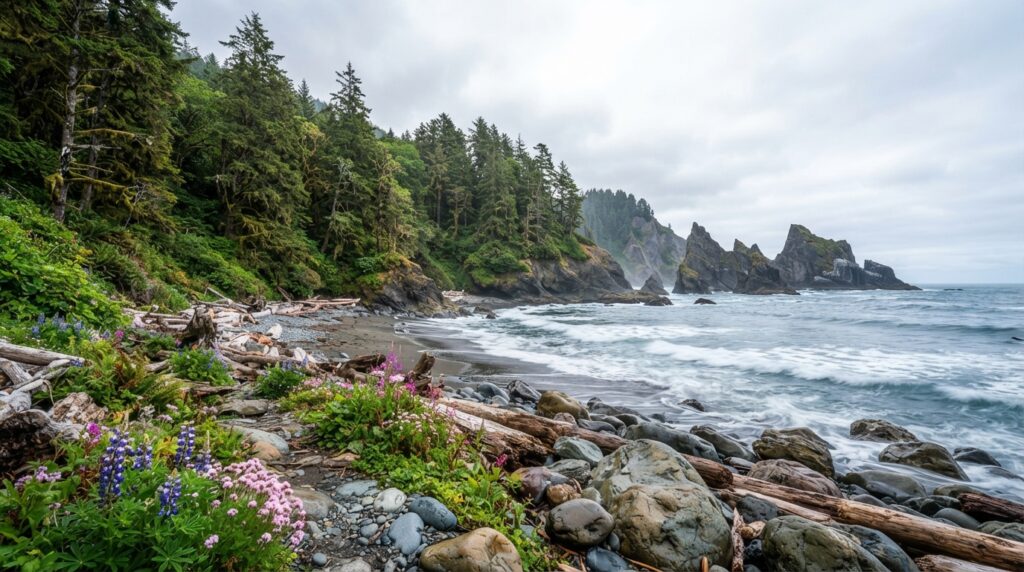
Distances matter inside Olympic, too: no roads cross the park. We should choose the coast or forest areas we most want, then build driving time around them.
Mount Rainier National Park brings a different kind of mountain scenery. It is a better fit when we want time near a major peak, rather than a coast-and-forest park visit.
Seattle can pair with Olympic National Park, while Portland can pair with Mount Rainier. These sample routes keep city time and park time in the same broad trip plan.
Olympic and Mount Rainier are separate destinations, not neighboring stops for one easy local day trip. We should allow for the roads and distance between each overnight base and park area.
For a short visit, keep one city and one park area at the core. Keep one city and one park area as the core of a short Pacific Northwest itinerary.
Which U.S. Islands Suit a Beach-Focused Getaway?
Hawai‘i is the better fit for a longer island trip with varied landscapes, while St. John is a compact Caribbean beach choice. Choose Hawai‘i for beach-and-volcano variety, or St. John for beaches and snorkeling. Our best option depends on how much time we have and how we want to spend it.
Island travel takes planning because flights, boats and local transport shape the day. We should look beyond the beach and consider how we will reach lodging, activities and other parts of an island.
Hawai‘i for a longer island trip
O‘ahu, Maui and Kaua‘i each give us a different base for a Hawai‘i trip. We can pair beaches with volcano experiences and other outdoor outings, but visiting more than one island adds travel time.
Travelers choosing a resort can compare island hotels and resorts by setting and trip style. Room types, package details and transfer needs can change the fit of a stay.
A longer visit makes it easier to explore one island without packing every day with transfers. We can choose one island first, then decide whether another stop belongs in the plan.
St. John for Caribbean beaches
St. John is part of the U.S. Virgin Islands and suits beach days and snorkeling. U.S. citizens do not need a passport to visit St. John.
Non-U.S. travelers should check their own entry requirements before booking. We should also compare transportation options, since reaching an island and moving around it shape the pace of a getaway.
Travelers looking for an all-inclusive stay can compare beach resort package features, including meals and services. Rules and included activities can vary between properties.
Check entry documents and transportation options before settling on an island.
Where Can History Lovers Build a City Break?
Philadelphia is a strong first choice for a city break centered on the founding era and Independence Hall. Four cities offer clear landmark anchors for a history-focused visit. We can build a compact trip around one site or allow more days for museums and neighborhoods.
Independence Hall makes Philadelphia an easy starting point for early U.S. history. Boston’s Freedom Trail connects historic stops across the city, while Washington, D.C., has the National Mall.
- Philadelphia: Independence Hall.
- Boston: the Freedom Trail.
- Washington, D.C.: the National Mall.
- San Antonio: the Alamo.
San Antonio adds a distinct Texas history stop at the Alamo. Each city can support a short visit focused on its named landmark, but a longer stay gives us room to explore beyond it.
A landmark-centered trip may fit a few days, while museums and neighborhoods need more time. We can choose the main sites first, then leave room to walk and eat between stops.
Opening hours and tour options may affect the order of a day. Check those details before travel, especially when one landmark is the main reason for choosing a city.
We should avoid stacking too many scheduled entries into one day. Leave room between landmark stops so the history visit does not become a checklist of rushed entrances.
Which Southern Cities Make a Memorable Trip?
New Orleans is the clearest pick for a Southern trip built around Creole food, jazz and late-night energy. Savannah and Charleston suit a slower visit focused on historic streets and architecture. These city breaks offer different paces, even when both are built around local culture.
New Orleans is known for Creole cuisine, jazz and Bourbon Street nightlife. We can shape a trip around meals and live music, then decide how much evening activity fits our plans.
New Orleans for food and music
Food gives us a practical way to organize a New Orleans visit. We can set aside time for local dishes, music and a walk through the city, without treating every night as a late one.
Bourbon Street brings nightlife, but its busy pace may not suit travelers seeking quiet evenings. Lodging location matters if we want to sleep away from late-night crowds.
Savannah and Charleston for historic streets
Savannah and Charleston offer historic streets and architecture for a gentler city break. We can explore at a slower pace, taking time to notice buildings and local streets rather than rushing between major stops.
These cities work well when we want a walk-centered visit. We should still plan where to stay and how far we want to walk each day.
New Orleans calls for decisions about evening noise and activity, while Savannah and Charleston favor a quieter street-focused plan. The right choice comes down to the pace and experiences we want.
Choose lodging and daily plans around the pace we want, especially if nightlife is part of the itinerary.
What Are the Best Places to Visit Near California?
Point Reyes National Seashore is a strong coastal day trip from San Francisco, less than 2 hours away. January through April is peak gray whale season at Point Reyes. It gives us a coastal outing without requiring a full trip across California.
Travel time depends on our starting point and road conditions. We can use Point Reyes for a nature-focused day, then save longer coastal drives for a trip with more days.
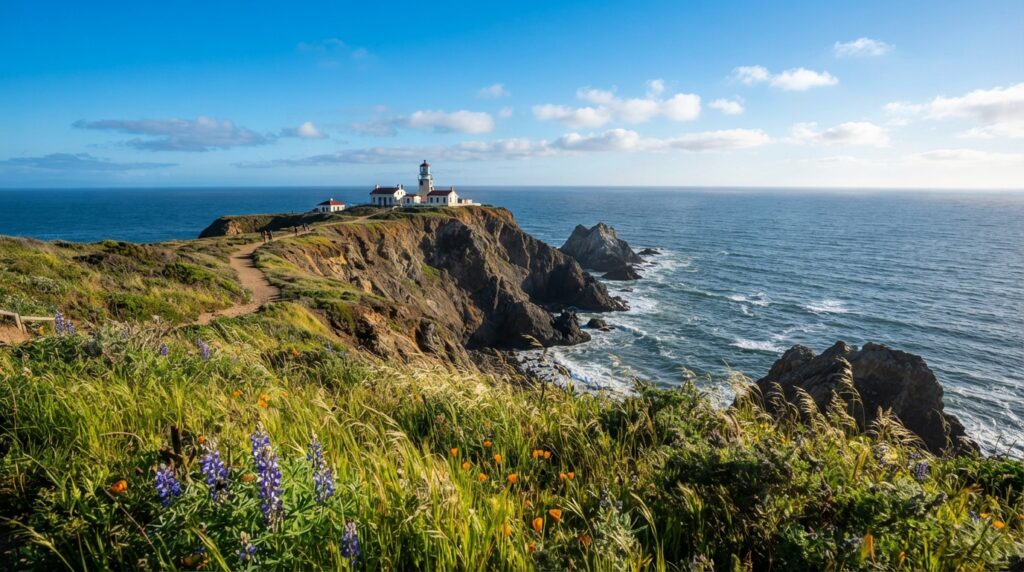
San Francisco gives us an urban base, and Point Reyes offers a change to open coast and outdoor scenery. In whale season, we can plan around the chance to look for gray whales, while keeping expectations flexible.
Monterey and Big Sur are also California trip stops, but they call for a different time budget. They work better as longer outings or overnight stops than quick add-ons to every San Francisco visit.
We can compare the coastal options by the hours available and where we begin. Point Reyes is the closer excursion; Monterey and Big Sur make more sense when the route itself is part of the trip.
Coastal weather and road conditions can affect the day, so we should leave some room in the schedule. A flexible plan makes it easier to enjoy the outing if travel takes longer than expected.
Check whale-season timing and local conditions before planning the drive.
What Are the Best Places to Visit Near Texas?
San Antonio is a strong first choice for history, Austin for city energy and Big Bend for a remote outdoor trip. Texas distances can make a multi-city itinerary more driving-heavy than expected. We can add Houston for a large-city visit, but a short trip should focus on one region.
Each stop supports a different kind of visit, from urban time to wide-open scenery. The names may look close on a map, but that does not make them simple day trips from one base.
- Austin for a city break.
- San Antonio for the Alamo and historic attractions.
- Houston for a large-city visit.
- Big Bend National Park for remote outdoor scenery.
Austin can anchor a city-centered break, while San Antonio gives history fans the Alamo. Houston offers a major-city stop, and Big Bend suits travelers ready for a more remote trip.
Big Bend calls for a different pace from a city visit. We should plan around the outdoor setting and avoid treating it as a quick add-on to a tight urban itinerary.
Putting several Texas cities and a remote park into a few days can mean long drives. We can choose a base, then add stops that fit the route and time available.
Choose one Texas region as the base if the trip is short, rather than assuming nearby names on a map make easy day trips.
Which U.S. Destinations Work Best by Season?
Spring and fall are useful shoulder seasons for travelers who want more moderate conditions than peak summer in many U.S. destinations. Match the season to the activity, then check local weather and access. California, Alaska, New England, Florida and the Southwest each offer different reasons to travel.
January through April is peak gray whale season at Point Reyes National Seashore, making spring a strong time for a coastal visit. Summer 2026 travel plans were reported by around 72% of Americans, so popular routes may draw many travelers.
Spring and fall shoulder seasons
Spring can bring gray whale watching at Point Reyes, while fall gives New England its seasonal color. These trips work best when we choose dates around the experience, rather than trying to cover several regions in one visit.
Some routes and attractions change with the weather. We should check local conditions close to departure, especially if the plan depends on outdoor access.
Summer escapes
Alaska and northern national parks are strong summer options for travelers seeking cooler outdoor days. Summer can also suit a city trip or a visit to Washington, D.C., if we plan around the local heat and our preferred activities.
A summer itinerary needs realistic travel days. We can choose one region and leave room for local drives, rather than trying to cross several states during a short break.
Winter sun and snow
Florida and the Southwest offer warmer-weather options for winter trips. Travelers who prefer snow can choose mountain destinations, with road access and conditions shaping the plan.
Weather and local access can shift from year to year. A route that works in one season may need changes when roads, trails or local services are affected.
| Season | Suggested destination | Reason to go |
|---|---|---|
| Spring | Point Reyes, California | Peak gray whale season |
| Summer | Alaska or northern parks | Outdoor trips in northern regions |
| Fall | New England | Seasonal fall color |
| Winter | Florida or the Southwest | Warmer-weather escapes |
Check local weather and seasonal access close to departure, especially for mountain and park routes.
How Many Days Should We Plan for One U.S. Trip?
Plan 3-5 days for one city or park gateway, 7-10 days for one region and at least 2 weeks for a multi-region trip. Those ranges are planning rules, not guarantees. Driving distances and overnight bases change how much we can comfortably see.
Start with the base before adding side trips. New York City can anchor a city stay, the Grand Canyon can center a park visit, and Hawai‘i can fill a longer island break.
More stops mean more transit and more hotel changes, so plan the route before adding destinations.
A set number of days cannot cover every itinerary. A drive-heavy route or several overnight bases may call for more time than one city stay.
Use this short checklist before booking:
- Choose one region as the trip’s main focus.
- Estimate transit time between stops and overnight bases.
- Limit hotel changes so travel does not take over each day.
- Confirm opening hours and access conditions for planned stops.
We can then remove stops that make the trip feel rushed. A realistic route often gives us more time to enjoy each place.
Leave a spare half-day in a longer itinerary for delays, rest or an unexpected change of plan.
Conclusion
A memorable U.S. trip does not need to cover the most ground; it needs a destination that fits our time and priorities. A city break, an island stay and a park visit each ask for a different pace, so the right choice is the one we can enjoy without rushing.
Our next step is simple: choose one region, set the travel dates and check current access before booking. That keeps the plan grounded in real travel time and seasonal conditions.
Pick one place that excites us, check its seasonal access and start building the trip around it.