We can start exploring without waiting for friends’ schedules, budgets, or interests to line up with ours. A trip on our own can still include shared meals, guided outings, and new connections. We simply choose when to join and when to enjoy our own company.
Independent travel can make room for experiences that fit our interests and time in life. It can also bring questions about planning, cost, confidence, and safety. No single style of trip suits everyone, so we can shape a first outing around what feels manageable.
We can begin close to home, choose a place that feels comfortable, and set a budget that leaves room for changes. If we want company, a shared activity can add it without handing over every choice. If we want quiet, we can keep the day to ourselves.
A successful first outing can be as simple as a nearby overnight stay with one plan and room to change it.
Key Takeaways
- Choose a trip length and pace that fit our comfort level.
- Start with a familiar place and a simple plan.
- Compare the full cost, including flights, rooms, and local transport.
- Use shared activities when we want company, not as a requirement.
- Save key details and check local conditions before departure.
What Does Solo Travel Offer, and What Can Feel Difficult?
Traveling independently gives us control over our pace, while leaving us responsible for every choice. We can change plans freely, but we also handle transport, meals, and decisions on our own. That freedom is the main appeal for many travelers.
In the 2026 Solo Female Travel Survey, 80% of respondents traveled both solo and with others in the prior 12 months. The survey’s travel findings also name freedom and flexibility as a leading reason women traveled solo. A single supplement is an extra charge a solo traveler may pay when occupying a room priced for two.
Independent travel gives us choice over the day, along with responsibility for each decision.
Freedom to Set Our Own Pace
Among women surveyed, 85% named freedom and flexibility as a reason for solo trips. Other common reasons were escaping routine and responsibilities (81%), relaxation and self-care (76%), and challenging themselves (75%). These findings describe the women surveyed, not every traveler.
Some people travel solo because nobody is free to join them; 58% of women surveyed gave that reason. Group trips remain an option: 21% planned women-only trips, 16% planned mixed-gender group trips, and 9% planned either type.
Concerns We Can Plan Around
Safety and cost were each concerns for 68% of women surveyed. Other worries included language barriers (47%), getting lost (40%), something bad happening (36%), loneliness (32%), and dining alone (23%). These concerns can shape plans without deciding whether we go.
Planning and confidence tips apply across genders, including for men looking into solo travel for men. The survey figures here describe women’s responses and should not be generalized to everyone. It reports Gen Z safety concerns separately, but does not establish one reason Gen Z is interested in traveling cautiously.
Treat a concern as a planning prompt, not as proof that a trip is out of reach.
How Can We Make a First Trip Feel Manageable?
A nearby one- or two-night stay is a manageable way to try making travel decisions independently. We can choose a familiar U.S. destination, then sort out transport, lodging, and one or two priorities before leaving. Starting small gives us practice without making every choice feel high-stakes.
Among women who had never traveled solo, 73% worried about higher costs and 57% about safety. Booking also felt difficult: 49% worried about booking everything themselves, and 48% worried about getting it all booked. A U.S. trip-planning guide can help us group nearby stops and check access details.
Try a Nearby Overnight Stay
Traveling in our own country is one practical choice; 16% of survey respondents recommended it for a first solo trip. For destinations for a first solo trip, we can pick a town we already know or a nearby city with clear transport. One or two nights are enough to practise making our own plans.
Simplify the Booking Decisions
Women who had never traveled solo were more likely to book if they could join a women-only tour, according to 76% of survey respondents. That is one option for anyone who wants company while practising travel away from home. We can also keep an independent overnight simple:
- Choose a familiar destination.
- Confirm transport and lodging.
- Save key details offline.
- Leave open time in the schedule.
Before leaving, check arrival times, the route from the station, and the lodging’s check-in rules. We can set one main activity and one backup, rather than filling every hour. Keep the first itinerary simple enough that a delayed meal or a missed attraction will not derail the whole trip.
Which Destinations Fit Different Solo Travelers?
The right destination is one whose transport, daily pace, and social options match our comfort level. A familiar U.S. place is often the most approachable first choice, while a longer trip can suit travelers ready for more change. Fit matters more than choosing a famous name.
Southern Spain suits a city-and-food break, while Iceland works well for nature and organized day trips. These are options to research, not blanket safety guarantees. We should check current transport, entry, and safety information for our own route.
A Familiar Place Close to Home
For a first outing, a nearby town or city can keep transport simple and leave more time for the place itself. A familiar language, known payment methods, and easy access home may help us feel at ease. Sixteen percent of women surveyed recommended traveling in one’s own country for a first solo trip.
We can choose a place with a walkable center, a clear route from the station, and activities that work in different weather. Grouping nearby stops helps us avoid spending the whole day in transit. The U.S. travel guide offers tips on regional planning, transport, and park access.
Southern Europe for Cities and Food
Southern Spain is a strong choice for solo travel in Europe when we want lively streets, historic buildings, and good food. Granada and Seville offer distinct city settings to explore at our own pace. Both can suit a short city break with a mix of planned sights and unhurried meals.
Albania is another option to research, especially if its hostel scene fits our social style. Tirana can serve as a starting point for exploring the country. We should look at travel times between towns before booking several stops.
Southeast Asia for Backpacker Routes
Thailand, Vietnam, and Malaysia have backpacker routes and social hostels that may appeal to travelers who want easy chances to meet others. Hostels can make shared activities more accessible, though we should check room types and location before booking. The right route depends on how much time we have and how often we want to move.
For beaches or an island stay, we should check how ferries and local transport fit our schedule. A simple route with fewer hotel changes can leave more time to enjoy each place. We can also compare towns with different levels of activity before choosing where to stay.
Nature-Focused Trips and Organized Day Tours
Iceland and Costa Rica offer organized day-trip options for travelers who want time outdoors without arranging every detail themselves. Peru may suit people drawn to hiking routes, while New Zealand can work for bus-and-hostel travel. These examples match different interests, not one ideal style.
We should check whether a tour starts near our accommodation and how we will return afterward. A destination may look easy to explore on a map but involve long transfers in practice. Before booking, check the route between lodging and activities, not just the attractions that look appealing.
How Can We Reduce Risk While Traveling Alone?
A useful safety plan combines current local information with simple habits we can follow consistently. Squaremouth’s 2026 risk index assessed 113 countries using medical access, safety and peace measures, local sentiment, internet access, and other factors. It is one tool, not a prediction of any individual traveler’s experience.
The 2026 solo-travel risk index ranked Venezuela highest at 9.74/10, followed by Peru at 8.87 and Gabon at 8.51. It then listed Colombia, Bolivia, Jamaica, Guyana, Ecuador, Trinidad and Tobago, and South Africa. Country rankings cannot tell us exactly what will happen on a specific trip.
| Country | 2026 index score | Local night-walking response |
|---|---|---|
| Venezuela | 9.74/10 | Fewer than 10% felt safe walking alone at night |
| Peru | 8.87/10 | Fewer than 25% felt safe; nearly 60% feared attack |
| San Marino | 0.78/10 | Nearly 90% felt safe walking alone at night |
San Marino had the lowest score, followed by Andorra and Singapore. The next lowest scores were Austria, Czech Republic, Qatar, Estonia, Brunei, Denmark, and Slovenia. These comparisons can guide research, but local conditions and our plans still matter.
Among women surveyed, safety worries were reported by 72% of those with fewer than five solo trips and 62% of those with more than ten. Gen Z respondents reported safety concerns at 82%, compared with 59% of Boomers. In the prior 12 months, 16% had feared for their safety, and 1% said they had not managed to keep themselves safe.
Current local checks can help us choose a well-lit route and arrive during daylight when practical. If a street, ride, or venue feels wrong, we can leave and choose another option. The index also found fewer than 10% of Venezuela residents felt safe walking alone at night, while nearly 90% of San Marino residents did.
Recheck the latest destination conditions and the specific neighborhood and transport route before departure.
How Can We Keep a Solo Trip Within Budget?
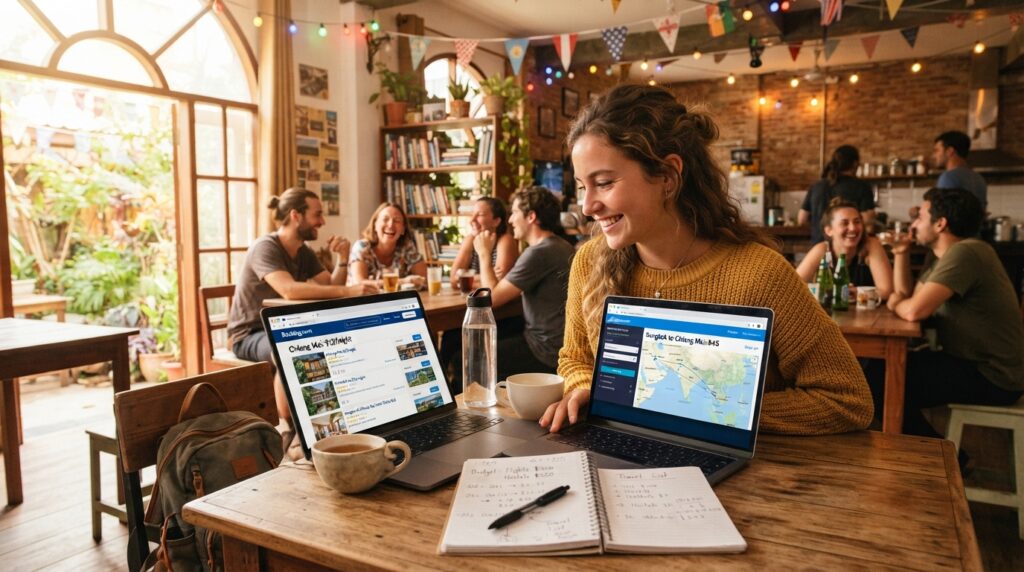
A cheap destination is not necessarily a cheap trip if reaching it costs more than the stay. Seville has a listed budget of €70-€110 per day, while Hanoi has low listed hostel prices. Long-haul airfare can change the total sharply.
These flight and lodging prices are listings for the last week of March 2026, not current offers. Hanoi hotels were listed at US$26, with hostel beds at US$4-$15. Athens accommodation was listed at US$106 for an apartment or US$27 for a bed in an eight-bed mixed dorm.
| Destination and route | Return-flight starting fare | Stops |
|---|---|---|
| Hanoi from Toronto | CAD$1,447 | One stop |
| Hanoi from New York | US$772 | One stop |
| Athens from Toronto | CAD$829 | One stop |
| Athens from New York | US$487 | One stop |
| Athens from New York | US$687 | Nonstop |
In that March 2026 comparison, Hanoi was 69% cheaper than Toronto and 82% cheaper than New York City. Athens was 29% cheaper than Toronto and 59% cheaper than New York City. The listed flight and lodging prices are snapshots, not quotes for a future booking.
Faro’s listed daily budget is €80-€120 for a budget trip and €150-€210 for a more comfortable stay. A bus from the airport to the city center costs €2.70, and a round-trip beach ferry costs €3.90. The train to Tavira is listed at €3.50.
In Faro, Ria Formosa boat tours start around €39, Faro Cathedral entry is €3.50, and Bone Chapel entry is €2. For room costs, consider a $100 double room and an $80 single room. One traveler pays about $30 more per night than someone splitting the double, as an illustration rather than a current quote.
We can also compare baggage fees, nearby airports, and the cost of a connecting flight. A lower fare may involve a longer journey, while a nonstop flight may save time. Compare lodging, local transport, activities, and flights together before deciding that a destination fits the budget.
How Should We Plan Each Day Without Overplanning?
A short list of three to five possibilities gives the day shape without turning every hour into an appointment. We can mark one essential sight, then leave gaps for meals, walking, and rest. Loose plans make it easier to adjust when a place surprises us.
Keep three to five possible activities in mind, not a fixed schedule. A meal and a walk through an area known for architecture can anchor the day. One optional activity gives us something to drop if we want more time.
- One priority sight
- One meal or food stop
- One walk or neighborhood
- One flexible slot
Local cultural calendars can help us spot religious festivals, bank holidays, and street parties. We can plan around an event if it genuinely interests us, while checking for closures or busy transport. A simple itinerary record can hold each day’s transport, overnight place, booked activity, and backup idea.
In Pollença, Mallorca, a conversation led to more local recommendations and changed the day’s plans. That kind of discovery works best when we have not booked every hour. Keep at least one open slot so a good local recommendation can fit.
How Can We Meet People Along the Way?
Shared activities give us a natural reason to talk without needing to approach a large group cold. We can join one event and still keep the rest of the trip to ourselves. Company can be optional, not the point of every activity.
Walking tours, food tours, cooking classes, sports events, and excursions offer a shared focus. Meetup hosts local events such as photography walks, happy hours, and weekend activities. Servas is a hospitality-exchange network.

Solo travel websites and event platforms can help us find things to do nearby. We should check who hosts an event, where it meets, and how we will get there and back. A clear meeting point and public venue can make the plan easier to assess.
- Hostel common areas or hosted activities
- Walking or food tours
- Cooking classes or sports events
- Local Meetup events or Servas hospitality exchange
We can choose just one activity that fits our interests and energy. If the group or setting does not feel right, we can leave. Choose a public, clearly organized activity and keep control of our own way back.
How Can We Handle Meals and Quiet Moments?
A counter seat can make a first solo meal feel more relaxed than sitting alone at a large table. A lively café, a book, or simply watching the room can make the food experience feel natural. We do not need a prop to enjoy a meal alone.
Dining by ourselves is not unusual, and it does not have to be a test of confidence. At JG Melon in New York City, a counter seat became a conversation with nearby diners. That is one possible outcome, not a goal we need to chase.
Some evenings call for company; others feel better in quiet. A short stretch of loneliness does not mean the whole trip is going badly. We can alternate a planned social activity with intentional time alone.
If our mood dips, we can take a walk in a populated area or message someone we trust. A favorite meal, a familiar song, or a break back at our accommodation may also help us reset. We can choose what feels comforting in that moment.
Give ourselves permission to enjoy a quiet meal without treating conversation as a requirement.
When Is a Guided Group Tour a Better Fit?
A guided group tour is useful when we want company and logistics handled, but not every hour scheduled. It can reduce planning tasks and provide scheduled time with fellow travelers. Independent trips give us more control over pace and daily choices.
EF Ultimate Break designs trips for travelers ages 18 to 35. Its solo trips are fully planned and include local guides and culturally immersive experiences. EF Go Ahead Tours says its solo tours include a private room in the tour cost and 24/7 global staff support.
Fully Planned Trips for Younger Adults
EF Ultimate Break is designed for younger adults who want a planned trip with local guides. A set itinerary can lower the number of bookings we manage ourselves. Travelers should still compare the pace and daily activities with their own interests.
Private Rooms and Flexible Group Tours
EF Go Ahead Tours welcomes solo travelers on more than 200 tours. Its solo-specific tours include group activities and time to explore independently. The table compares only the listed features, not the quality or value of either option.
| Option | Planning and group structure | Private-room or support detail |
|---|---|---|
| EF Ultimate Break | Fully planned solo trips and local guides | No private-room or support detail stated here |
| EF Go Ahead Tours solo-specific tours | Group activities plus independent time | Private room included; 24/7 global staff support |
| Independent trip | Traveler arranges itinerary and bookings | Traveler chooses and pays for accommodation |
A tour may suit us if we want planned company but still value some personal time. An independent trip works when we prefer to make each booking and change plans ourselves. Before paying, check the room arrangement, what is included, and how much unscheduled time the itinerary allows.
Can We Travel Alone at 70 or Older?
A 70-year-old can travel alone when the destination, pace, and support plan fit their health and mobility. Age itself is not a barrier, but stamina, medication needs, transport access, and comfort getting help all matter. A well-matched trip can make travel more manageable.
For a long flight, older travelers are advised to get up and walk the aisle every hour or two. Road travelers can plan regular rest stops. We should carry physical or digital copies of medical history, current prescriptions, and health insurance information.
Keep medication in its original, labeled container, especially when flying internationally. A 2024 study of 13 Brazilian women aged 52-78 found that participants weighed safety and health when choosing destinations. Their views offer a specific perspective, not a measure of all older travelers.
We can discuss personal health concerns with a clinician before booking. The study of older women traveling solo also describes how comfort and access needs shaped their choices. Build rest and medication access into the itinerary before choosing demanding transfers or long walking days.
What Should We Check Before Leaving?
A small set of saved details can make a disrupted trip easier to manage when our phone or plans fail. We can keep key information available offline and share the route with someone we trust. Preparation helps when a device loses power or a connection drops.
In the 2026 Solo Female Travel Survey, 57% of respondents always bought travel insurance for solo trips in 2025. Another 51% always bought medical insurance. Travel insurance can help with cancellation, injury, or theft costs, but coverage depends on policy terms.
- Save accommodation and transport details offline.
- Keep physical or digital copies of important personal details.
- Share an itinerary with a trusted contact.
- Save local emergency numbers and learn basic phrases.
- Review travel and medical insurance terms.
We can check whether a policy covers our planned activities and the costs we care about. A low price alone does not show what the policy will pay. Save the insurer’s contact details where we can find them without internet access.
Keep essential trip details offline, and make sure a trusted person knows how to reach us.
Check that our trusted contact has the current itinerary and a reliable way to reach us.
Conclusion
We do not need to plan a grand expedition to begin exploring on our own. A nearby overnight trip can offer new experiences without requiring a long leave from work or a complex route. We can also add a shared activity without giving up control of the rest of the day.
There are plenty of ways to shape a trip around our interests, energy, and budget. We can keep the plan simple and leave space to change it. Pick one nearby place, choose a date, and give ourselves permission to start small.