A memorable beach trip can mean calm water, dramatic scenery, wildlife, or a lively town within walking distance. The best beaches in the world offer very different days, so the right place depends on what we hope to do.
Some travelers want to swim in a sheltered lagoon. Others would rather watch sea lions, hike to a quiet bay, or see unusual sand. A beach near a city can make it easy to add local food and culture to the day. Farther-flung shores may call for a longer trip, but the journey can be part of the experience.
This is an editorial selection, not one official global ranking. We’ll compare a range of coastlines, activities, and settings, then consider how published rankings fit into those choices. We can narrow the choices by matching a destination’s defining features to the kind of days we want.
Key Takeaways
- Choose a beach for the kind of day we want, not its rank alone.
- Rankings differ by publisher, location, and review window.
- Protected lagoons suit relaxed swims; reefs and wildlife add snorkeling interest.
- Remote shores may need extra travel time and offer fewer facilities.
- Check entry rules and local water conditions before setting out.
How are the Best Beaches in the World chosen for 2026?
Tripadvisor announced its 2026 beach awards on February 17, using a defined review window rather than a live popularity count. The review window means the dates of traveler reviews counted toward an award.
The Tripadvisor awards are the Tripadvisor Travelers’ Choice Best of the Best Beaches awards. For 2026, they used the quality and quantity of traveler reviews submitted from November 30, 2024, through December 1, 2025. Those dates describe the review window, not a count of current beach visits.
A ranking gives us one way to compare places, but its meaning depends on who made it and what it covers. “Best beaches in the world 2026” can refer to different publishers and scopes, so we should not treat every list as equivalent.
Before comparing two rankings, check their publisher, geographic scope, review window, and whether each list is ranked or editorial.
Use this checklist to understand what a list measures:
- Publisher and award name
- Geographic scope, such as global, national, or regional
- Review window, including its start and end dates
- Formal rank or editorial selection
A numbered award can show how one publisher ordered entries under its method. An editorial list can instead group beaches by scenery, swimming, or travel style.
Both can help us make a shortlist, but they answer different questions. One may rank named beaches, while another compares islands, towns, or wider destinations.
Before using any ranking to choose a trip, check which places and review dates it actually covers.
Which 10 beaches belong on a world shortlist?
A useful first shortlist spans several continents instead of treating one coastline as the only kind of beach destination. These are editorial picks, not an official numbered world ranking, and each offers a distinct kind of coast.
Our Best beaches in the world to visit should include choices for surf, city life, wildlife, and quiet island days. The best beaches in the world by country depend on whether we value surfing, scenery, seclusion, or easy access.
Start with the kind of beach day we want, then compare the places that fit it.
Asia and the Pacific offer varied beach days
Sanya, on China’s Hainan Island, has 40 km of beachfront across four bays. That scale gives travelers more than one stretch of sand to explore.
The Pass in Byron Bay, Australia, draws people seeking a surf-focused coast. White Bay in the British Virgin Islands offers a smaller island setting and clear views across the water.
Africa and the Indian Ocean bring quieter coastal escapes
Mnemba Island sits off Zanzibar’s coast. The island is accessible only to guests of its resort, which sleeps 23, so this is a limited-access choice.
Dueodde, on the Danish island of Bornholm, offers a Baltic beach setting. West Beach runs along Berneray’s west coast in Scotland, where a long shore can make a walk part of the visit.
The Americas and Europe span surf, culture, and nature
Ipanema in Rio de Janeiro combines beach time with a lively city setting. Cabo San Juan del Guía lies in a national park, while Punta Paloma pairs a Spanish coast with open views.
Keem Bay, on Ireland’s Achill Island, offers a sheltered curve beneath steep land. These ten names show how a beach list can include urban shores, islands, and nature-focused coasts.
We can narrow the options with four trip filters:
- Preferred water activity, such as swimming, snorkeling, or surfing
- Tolerance for crowds and busy beach days
- Willingness to travel by boat or hike
- Interest in nearby culture or food
Other names to consider include Isla Pasion, Eagle Beach, Praia da Falésia, Banana Beach, La Pelosa, and Manly Beach. Boulders Beach, Isola Bella, Bamburgh Beach, Lençóis Maranhenses, and Anakena also broaden the range.
Keep the first list flexible until we know whether the trip is built around swimming, scenery, or getting off the beaten path.
Where are the world’s most beautiful beaches?
Crete gives travelers two very different scenic beach days, from Elafonissi’s pink-tinged shore to Balos Lagoon’s pale sand and turquoise water. These beautiful beaches are part of a curated selection, not a measurable global title.
Seven striking settings stand out for their color, rock, or shoreline shape. Each one offers a different view, so the best choice depends on the scenery we most want to see.
Crete pairs pink sand with turquoise lagoons
Elafonissi is known for a shore with pink tones and shallow water. The color may appear more strongly in some areas than others.
Balos Lagoon has pale sand, a broad lagoon, and bright blue-green water. Its shape and color make it a memorable coastal view on Crete.
Granite coves give the Seychelles a distinctive shoreline
Anse Source d’Argent, on La Digue in the Seychelles, has large granite boulders and shallow water. The rocks frame small sections of shore and give the cove its character.
The mix of stone, sand, and water makes this a beach for taking in the setting as much as for a swim. Its shoreline feels different from Crete’s open lagoon views.
Rock, water, and pale sand shape other scenic picks
Sarakiniko, 3 km north of Adamas port on Milos, is marked by pale rock shaped by the sea. Lalaria on Skiathos is known for its striking rock arch and cove.
Punta Rata curves 400 m around a headland protected by a nature reserve. Playa Balandra in Mexico is a calm bay with pale sand and clear water.
These seven places give us different versions of beauty: pale stone, pink-tinted sand, granite, and enclosed coves. A beach’s look can also change with light, tide, and weather.
For a quieter visit to a popular scenic shore, arrive early or choose a shoulder-season day.
Which beaches are best for swimming and snorkeling?
For an easy, unhurried swim, a sheltered lagoon is a better starting point than an exposed surf coast. Shallow water at One Foot Island sits inside Aitutaki’s lagoon and surrounds an island small enough to walk around in minutes.
Calm, protected water suits relaxed swimming, while reefs and wildlife make snorkeling more rewarding. The best beaches in the world to swim are not automatically safe in every season or tide.
Calm lagoons suit relaxed swimming
One Foot Island offers a lagoon setting where shallow water lets visitors wade and float. Sunrise Beach on Koh Lipe is another option for travelers seeking a tropical island swim.
Poipu Beach in Kaua’i has a protected swimming area that suits a more settled beach day. Conditions can still change, so the feel of a beach on one day does not guarantee the same water later.
Wildlife and reefs reward careful water time
La Loberia is a pebbly beach on San Cristobal Island in the Galápagos. Sea lions and marine iguanas live there, adding wildlife interest to a visit.
Give animals room and watch them without touching or feeding them. At a reef, snorkeling can reveal more than a view from shore, but we should stay aware of where we swim.
Chesterman Beach in British Columbia suits a different kind of coastal outing. Its water temperatures do not get much higher than 13.8°C (57°F), so it may feel cold even on a sunny day.
Check the day’s local conditions before entering the water, even at a beach known for calm swimming.
Where can we pair a beach day with local culture?
Waikiki suits travelers who want the sea close to restaurants, surf lessons, and the energy of Honolulu. City access makes it easy to add a meal or walk to a day by the water.
A beach near a town can bring food, history, and local routines into the trip. The setting around the sand may matter as much as the shoreline itself.
Waikiki makes a convenient city-and-sea base
Waikiki Beach faces Diamond Head and sits near restaurants, bars, and surf schools. We can spend part of the day in the water, then explore Honolulu without leaving the city.
Rio de Janeiro has a different beach culture, with people gathering at sunset and taking part in sports along the coast. Ipanema’s numbered lifeguard posts mark different beach areas, and local groups use distinct stretches.
Historic towns add character to a coastal stay
Monterosso al Mare is the only one of Cinque Terre’s five villages with a beach. A stay there can pair time by the sea with walks through a historic village.
Banje Beach sits beside Dubrovnik’s old town, joining a coastal visit with city streets and dining. This suits travelers who want more than a full day on the sand.
A town can also shape the pace of a trip. Restaurants, surf lessons, and historic streets give us options when we want a break from the water.
Choose a base that leaves enough time for the town as well as the sand.
Which remote beaches reward extra effort?
Whitehaven Beach requires a boat or aircraft transfer, so reaching it is part of the day’s plan rather than a quick stop. Extra travel can open up quieter scenery, but it takes planning.
Remote does not mean guaranteed solitude or easy conditions. Facilities may be limited, weather can change, and the return journey may take more effort than the trip out.
Boat journeys lead to hard-to-reach shores
Whitehaven Beach sits on Whitsunday Island and can be reached by boat, seaplane, or helicopter. The transfer shapes how long we can stay and what else fits into the day.
Travelers choosing an island stay can compare transfer time with their trip pace. These vacation ideas for different travel styles can help us decide whether one base or several stops make sense.
Long walks open up quieter coastal scenery
Keem Bay is about an 8 km drive from Keel village on Achill Island. The bay is reached by road, while exploring the area may also mean walking along its coastal paths.
West Beach stretches along 3 miles of Berneray’s west coast. A long walk can help us take in the shoreline, but it also means allowing time to return.
These places call for different kinds of effort: a transfer, a drive, or a walk. We should factor the full journey into the day, not just the time spent at the beach.
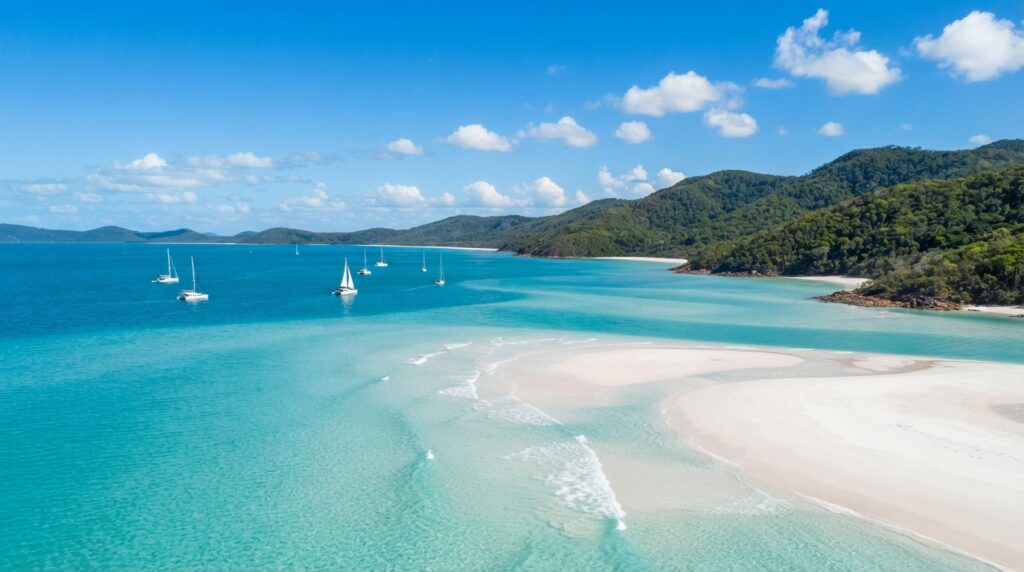
Confirm the return transport and the route back before setting out for a remote shore.
Which beaches have dramatic cliffs and rock formations?
Steep limestone walls make Maya Bay feel like a cove enclosed from the open sea. Its striking rock walls became widely known through the 2000 film The Beach.
At these shores, the landform can be the main event. Cliffs, rock, and wind-carved dunes shape the view more than a long stretch of sand.
Maya Bay is enclosed by steep limestone
Maya Bay sits among the Phi Phi Islands in Thailand. Its enclosed shape and high limestone cliffs make the cove feel sheltered from the wider sea.
Visitor pressure led to conservation measures. The bay’s fame can bring crowds, so its current access rules matter as much as the view.
Shipwreck Cove and Punta Paloma make the landscape the main event
Navagio, also called Shipwreck Beach, lies on Zakynthos in Greece. The MV Panagiotis ran aground there in 1980, leaving the wreck as a landmark on the shore.
Beach landings have been closed since 2022 because of landslide risk. The cove remains a striking sight, but the beach itself is not open for landings.
Punta Paloma in Spain has wind-carved dunes and views toward Morocco and the Strait of Gibraltar. Sand, sea, and the open horizon shape the visit.
For a dramatic viewpoint, verify which areas are open before planning a beach landing.
Which beaches stand out for unusual sand and dunes?
Not every remarkable shoreline is white: dunes, volcanic sand, and coral-derived color can define a beach just as strongly. Distinctive geology makes these shores different from a conventional pale-sand beach.
Tripadvisor’s 2026 “One of a Kind” beaches included Sleeping Bear Dunes and Wai’anapanapa State Park. Their special features are dunes, black sand, and lava tubes.
| Place | Distinctive feature | 2026 recognition |
|---|---|---|
| Sleeping Bear Dunes | 450-foot sand dunes | Tripadvisor “One of a Kind” |
| Wai’anapanapa State Park | Black sand and lava tubes | Tripadvisor “One of a Kind” |
| Punalu’u Black Sand Beach | Black-sand shoreline | Hawaii beach destination |
Sleeping Bear Dunes stands out for its 450-foot sand dunes. The park’s high dunes create a different kind of shoreline from a flat beach.
Hawaii’s Wai’anapanapa State Park combines black sand and lava tubes. Punalu’u Black Sand Beach also has a dark volcanic shore, making sand color part of the visit.
Pink Beach on Padar Island gets its color from red coral material mixed with pale sand. Rauðasandur in Iceland is a long shore with red, orange, and pink tones.
Lençóis Maranhenses and Anakena are other unusual landscapes to consider. Each can expand our idea of what a beach trip might look like.
Choose these landscapes for their distinct geology, not because every unusual shore is suited to swimming.
Which beaches lead Tripadvisor’s 2026 U.S. rankings?
La Jolla Cove took the top U.S. position in Tripadvisor’s 2026 awards, with four more beaches completing the top five. These U.S. positions are not a global top-five claim.
La Jolla Cove ranked No. 1 among U.S. beaches. It is a protected underwater park and marine reserve with year-round wildlife viewing, including sea lions and migrating gray whales.
| Rank | Beach | State |
|---|---|---|
| 1 | La Jolla Cove | California |
| 2 | Clearwater Beach | Florida |
| 3 | Poipu Beach Park | Hawaii |
| 4 | Waikiki Beach | Hawaii |
| 5 | Lanikai Beach | Hawaii |
La Jolla Cove’s protected marine setting gives visitors a chance to see wildlife throughout the year. Sea lions and migrating gray whales are among the animals found in the area.
The other four positions span Florida and Hawaii. Clearwater Beach sits on Florida’s Gulf Coast, while Poipu Beach Park, Waikiki Beach, and Lanikai Beach are in Hawaii.
A named beach and a beach park can offer different kinds of visits, even when both appear in the same award list. Rank gives us a comparison point, not a full description of each place.
Treat the rank as a starting point, then choose by the setting and activities that fit the trip.
Which beaches fill Tripadvisor’s U.S. ranks 6 through 10?
The lower half of Tripadvisor’s 2026 U.S. top ten includes Florida, Hawaii, and California destinations. These five entries include both named beaches and state parks.
The ranking lists places with different scales and visitor experiences. A beach entry and a state park entry are not direct measures of the same kind of visit.
| Rank | Beach or park | State |
|---|---|---|
| 6 | Siesta Beach | Florida |
| 7 | Punalu’u Black Sand Beach | Hawaii |
| 8 | St. Andrews State Park | Florida |
| 9 | Santa Monica State Beach | California |
| 10 | Honeymoon Island State Park | Florida |
Siesta Beach and Punalu’u Black Sand Beach are named beach entries. St. Andrews State Park and Honeymoon Island State Park are wider park settings.
Santa Monica State Beach is another named coastal destination in the top ten. Its position belongs to Tripadvisor’s 2026 U.S. awards, not to a separate global list.
We can use the ranking to spot places, then look at what each one offers. A state park may include more than a beach, while a beach entry names a specific shore.
Use each place’s own access and activity details to decide whether its rank matches your travel style.
Which destinations lead U.S. News’ 2026 beach ranking?
U.S. News’ 2026 list begins with Siesta Key, a Florida barrier island with 8 miles of white sand. This destination-level list ranks broader places, not only individual beaches.
Siesta Key ranked No. 1 among U.S. beach destinations. The five leading entries include islands and a city-and-island area.
| Rank | Destination | State or island |
|---|---|---|
| 1 | Siesta Key | Florida |
| 2 | Maui | Hawaii |
| 3 | Anna Maria Island | Florida |
| 4 | Honolulu-Oahu | Hawaii |
| 5 | Kaua’i | Hawaii |
Siesta Key’s 8 miles of white sand give the destination a long stretch of shoreline. Anna Maria Island, ranked third, has 7 miles of shoreline.
Maui and Kaua’i represent whole Hawaiian islands, while Honolulu-Oahu combines a city name with its island. Those entries cover more ground than one named beach.
Kaua’i’s swimming conditions vary by season. Summer offers its best swimming conditions, while winter water can be dangerously rough.
On Kaua’i, plan swimming for summer conditions and treat rough winter water as a reason to stay out.
Which destinations round out U.S. News’ 2026 beach list?
Sanibel Island leads the remaining U.S. News entries at No. 6, followed by destinations along the Gulf, Pacific, and Atlantic coasts. The list mixes islands, towns, and a long coastal region.
Ranks six through eleven cover places with very different sizes. A single island and a wide coast do not describe the same kind of destination.
Here are the next six entries in rank order:
- No. 6: Sanibel Island
- No. 7: Gulf Shores, about 50 miles southeast of Mobile
- No. 8: Destin
- No. 9: Clearwater Beach, with approximately 3 miles of Florida Gulf Coast shoreline
- No. 10: Malibu
- No. 11: The Outer Banks, spanning about 200 miles
Gulf Shores and Destin sit on the Gulf Coast, while Malibu is on the Pacific. Clearwater Beach has about 3 miles of shoreline along Florida’s Gulf Coast.
The Outer Banks is a long coastal region rather than one beach or town. Its span of about 200 miles makes it a broader entry than the named destinations around it.
Sanibel Island leads this group, but the rank alone cannot tell us how much ground a visit covers. We should compare destinations at a similar scale.
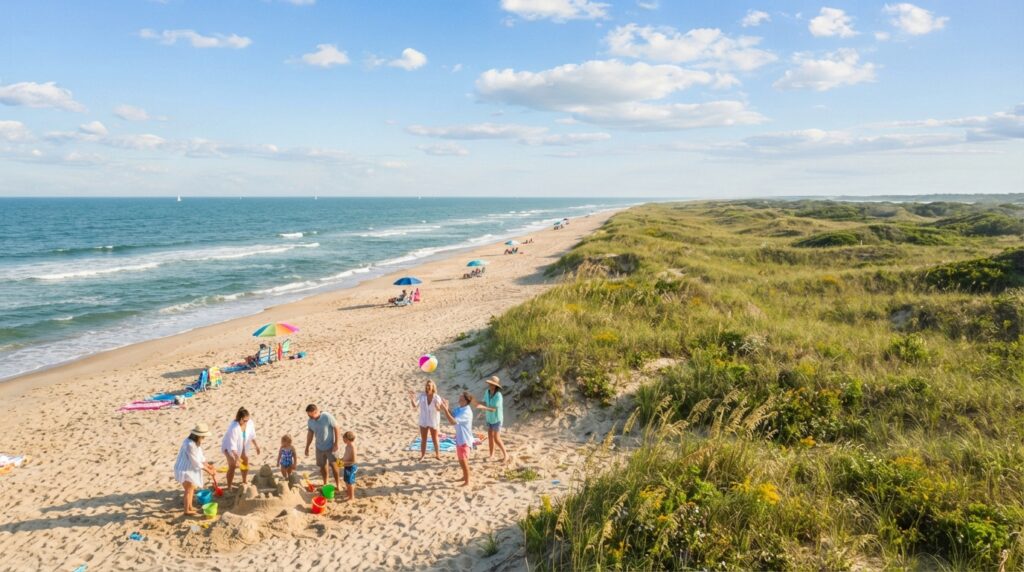
Check the scale of each destination before comparing its rank with a single named beach.
How can we swim more safely at beaches?
The safer choice is to swim at a lifeguarded beach and follow the conditions posted for that day. A rip current is a narrow, fast-moving channel of water flowing away from shore.
At beaches protected by USLA-affiliated lifeguards, the odds of a swimmer fatally drowning are 1 in 18 million. More than 80% of their ocean-beach rescues are caused by rip currents.
These figures apply to beaches protected by lifeguards affiliated with the United States Lifesaving Association. They do not mean that every beach or swim is risk-free.
Four habits can help us make better choices before entering the sea:
- Swim near a lifeguard.
- Never swim alone.
- Follow signs and flags.
- Avoid alcohol or drugs before swimming.
Conditions can change over the course of a day. A beach that looks calm from the sand may still have currents or other hazards.
Flags and posted signs share local information about water conditions. Lifeguards can also give direct guidance about where swimming is allowed.
If flags, signs, or lifeguard directions indicate a hazard, stay out of the water.
How should we plan around beach access, crowds, and season?
Check entry and transport rules before booking around a beach day, since some shores require a reservation, transfer, or resort stay. Access rules can shape which beach fits our trip.
Some beaches need advance planning before we can reach the sand. Wai’anapanapa State Park requires reservations, and Balandra Bay limits daily visits to 450 people.
Use this four-point check while planning:
- Confirm whether entry needs a reservation.
- Check whether a boat or aircraft transfer is required.
- Verify whether access is restricted to resort guests.
- Choose a time slot or arrival time that suits our crowd tolerance.
Balandra Bay offers entry slots from 8 a.m. to noon or 1 to 5 p.m. Its daily limit can affect which part of the day works best.
Whitehaven Beach requires a boat, seaplane, or helicopter transfer. Flamingo Beach is exclusive to guests of Renaissance Wind Creek Aruba Resort.
Maya Bay has visitor limits and conservation measures. The rules are part of managing a popular shore, so current access conditions matter when we set travel dates.
For longer island trips, transfer times can affect the rest of the day. A trip plan built around travel time and pace can help us avoid squeezing too many stops into one visit.
Recheck the destination’s current access instructions shortly before departure.
Conclusion
The strongest beach choice is the one that fits the kind of trip we want, not simply the highest position on a list. A calm swim, striking scenery, nearby culture, or unusual sand can each shape a good day.
Rankings can help us find places, but each uses its own scope and scale. The setting, access rules, and local conditions matter when we turn an idea into a real trip.
Pick a preferred region and activity, then confirm access and local water conditions for the intended dates. Choose a region and activity, then verify the beach’s entry rules and conditions before booking.